
A sale may complete a transaction, but it does not complete the customer journey. Yet, many brands continue to concentrate their marketing efforts on getting customers to make a purchase, with far less attention given to what happens once the order is placed.
This creates a gap between customer acquisition and customer retention. Businesses invest in advertising, festive offers, and promotional campaigns to bring shoppers to their websites, but the communication often loses momentum once a purchase is complete. Order confirmations and delivery updates may follow, but opportunities to understand the customer, address their concerns and build a reason for them to return are frequently overlooked.
This is particularly relevant during high-intent shopping periods such as Halloween, Diwali, Black Friday and Christmas. While brands compete for attention and spend heavily to attract new buyers, their existing customers already offer a valuable starting point for the next sale. The challenge is knowing how to build on that relationship rather than approaching them with another generic promotion.
This is where post-purchase communication needs to become a more deliberate part of the customer journey. It is not simply about keeping buyers informed after checkout or reminding them to shop again. It is about connecting every interaction—from feedback and customer support to product recommendations, returns and loyalty offers—so that each one adds value to the relationship.
For business leaders, this calls for a shift in perspective: the next sale should not begin with the next advertising campaign. It should begin with how a brand treats its customers after the previous purchase.
The Post-Purchase Gap is a Business Opportunity
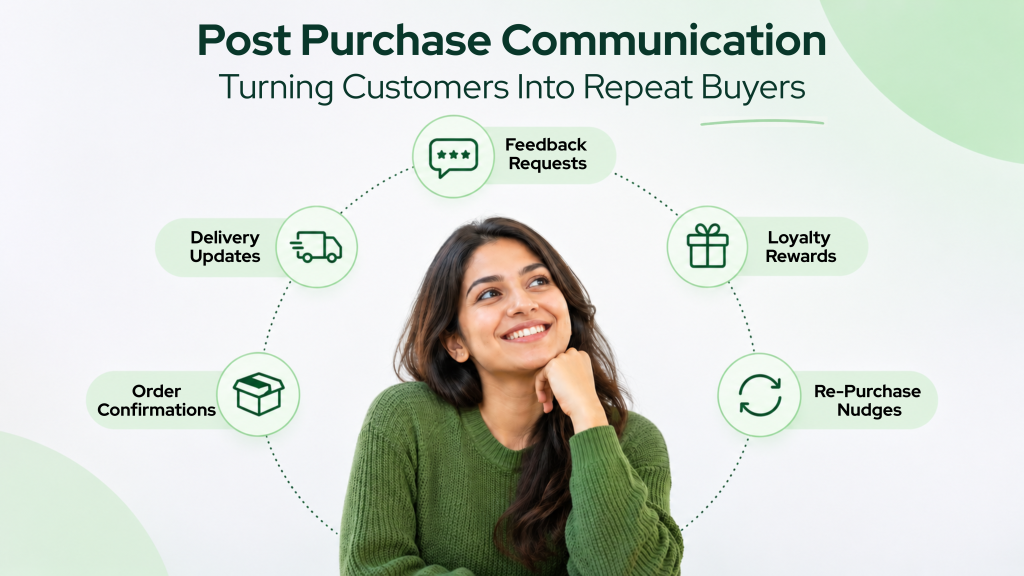
A customer who has just completed a purchase has already demonstrated intent. They know the brand, have interacted with its products and have a reason to listen. Yet many brands treat the journey as complete once the transaction is finished. The post-purchase journey can extend far beyond an order confirmation. It can include shipping and delivery updates, product education, feedback requests, replenishment reminders, relevant recommendations and review requests.
The important shift is to connect these interactions rather than treating each one as a separate message. A delivery update can reassure the customer. A product guide can help them get more value from what they bought. A feedback request can reveal what worked and what did not. Later, that information can shape a recommendation, loyalty reward, or relevant festive offer.
This is what makes the post-purchase period more than a follow-up exercise. It becomes a continuous customer experience, where each interaction gives the brand a better understanding of what the customer may need next.
When Something Goes Wrong, the Relationship Matters Even More
Post-purchase communication should not be limited to customers who are happy with their purchase. Returns, exchanges, delivery delays, and support requests are equally important parts of the customer journey. How a brand responds during these moments can shape the customer’s overall experience and influence their willingness to buy again.
A problem or query after purchase does not automatically mean a lost customer. In many cases, it is the way a brand handles that problem that determines whether the relationship can be maintained. A delayed order, an incorrect product, or a complicated return process can create frustration, but timely updates, clear explanations, and accessible support can help customers feel heard and reassured.
This changes how businesses should think about customer retention. A return request should not be treated simply as revenue moving backwards or a support ticket to close. It is an opportunity to understand why the customer is dissatisfied, address the underlying concern, and make the resolution process as straightforward as possible. Equally, keeping customers informed throughout the process can prevent uncertainty from adding to an already frustrating experience.
Ultimately, a strong post-purchase strategy is not defined by how well a brand communicates when everything goes right. It is also reflected in how consistently it responds when expectations are not met. Customers may not remember every routine update, but how a brand handles an inconvenient experience can have a lasting influence on whether they choose to return.
Turn the Last Purchase into Insight for the Next One
The period after a purchase allows brands to learn. A simple feedback message can ask what the customer thought of the product or experience. Purchase history can show which categories they prefer. Browsing behaviour can indicate what they considered but did not buy.
Together, these signals can help brands make personalised communication more useful. For example, a customer who bought festive clothing during Diwali may be more receptive to an upcoming wedding collection than to a completely unrelated product. A customer who repeatedly purchases from one category may respond better to early access to new products in that category.
The principle is straightforward: the next communication should reflect the last meaningful customer interaction. This also makes customer retention less dependent on repeatedly offering discounts. Relevance can be a stronger reason to return.
Build Anticipation Before the Next Festive Moment
Customers do not suddenly become interested in Christmas or Black Friday on the day a sale begins. There is usually a period when they start thinking about gifts, shopping, travel, and celebrations. Brands can use this window to build anticipation rather than appearing only when they want a sale.
Gamified messages, early-access invitations, festive quizzes, scratch cards, or exclusive discount codes can make these interactions more engaging. For example, a brand could tell existing customers that its Christmas collection is arriving soon and invite them to participate in a small game that unlocks an offer.
As the occasion approaches, communication can become more action-oriented: sale reminders, relevant product recommendations, limited-period offers, or abandoned-cart reminders. This creates a progression from engagement to consideration to purchase, rather than treating every message as an immediate sales pitch.
Not Every Customer Needs the Same Message
A customer database is rarely made up of one type of buyer. There are first-time customers, repeat buyers, high-value customers, one-time purchasers, and people who have not interacted with the brand for months. A strong post-purchase communication strategy recognises these differences. A first-time buyer may need a reason to make a second purchase. A loyal customer may respond better to early access or an exclusive reward. Someone who purchased during Diwali may be interested in complementary products, while an inactive customer may need a stronger reason to return.
The objective is not to create complicated customer journeys or offer everyone a larger discount. It is to make the communication relevant to the relationship that already exists. That is where customer retention becomes more meaningful. Instead of asking, “What discount will bring this customer back?”, brands can ask, “What would make the next interaction useful to this customer?”
Re-Engagement Should Not Stop at Existing Customers
The same thinking can be applied to people who interacted with the brand but did not make a purchase. Someone may have visited a product page, browsed a category, added an item to their cart, or spent time exploring the website without completing an order.
These customers are different from people who have never interacted with the brand. A well-timed customer re-engagement message can give them a relevant reason to return. It could be a reminder about a product they viewed, a festive offer, or an incentive such as cashback on their first purchase.
Instead of sending everyone a generic “Christmas Sale is Live” message, a brand could remind a customer about the product they previously explored and offer ₹500 cashback on the purchase. The difference is small, but the thinking is significant: the message responds to customer interest instead of simply broadcasting a promotion.
Make Every Channel Part of the Same Journey
WhatsApp and RCS can support these interactions through richer, more timely communication, whether it is a feedback request after a purchase, an early festive announcement, a personalised offer, or a reminder as a sale approaches. But the channel itself is not the strategy.
A perfectly timed WhatsApp message can still feel irrelevant if it ignores the customer’s previous interaction. Similarly, an RCS message adds little value if it is simply another generic promotion. The real opportunity is to connect customer data, communication, and timing so that each interaction builds on what came before.
This is also relevant to customer care. McKinsey’s latest State of Customer Care survey found that 40% of customer-care leaders reported significantly improved customer experience scores over the past 12 months, compared with 12% of lagging organisations. The broader lesson is that technology creates more value when it reduces friction and improves the customer experience, rather than simply increasing the number of automated interactions. (Source: McKinsey&Company)
For brands using platforms such as TrustSignal, this means thinking about WhatsApp, RCS and other channels as parts of a broader customer communication strategy rather than isolated campaign tools.
The Next Festive Sale Can Start with the Last Purchase
Festive marketing is often measured by how effectively a campaign brings in new traffic and conversions. But brands already have something valuable in their databases: existing customer relationships. The opportunity is to stop treating post-purchase customer experience as a collection of disconnected messages. Feedback, support, recommendations, loyalty rewards, and festive offers should build on what the customer has already done.
A useful way for business leaders to think about the journey is simple:
Purchase → understand → respond → nurture → re-engage → convert.
The goal is not to keep sending promotional messages until the customer buys again. It is to stay useful, understand what they care about, and reach them when the next relevant opportunity arrives. Because when Christmas, Black Friday or the next festive season comes around, the strongest customer relationship may not be the one created by the biggest advertising budget. It may be the one that a brand kept building after the previous purchase.