
Peak shopping periods such as Black Friday and Christmas bring a sharp rise in online searches. Consumers look for festive offers, compare prices, check product availability, and search for businesses that can meet their needs. For brands, this creates an opportunity to reach people who are already considering a purchase.
However, attracting a potential customer through an advertisement is only one part of the buying journey. What happens after someone clicks can influence whether that interest turns into a sale. Long forms, slow-loading websites, and delayed responses can make customers reconsider their choices.
This is where Click-to-WhatsApp (CTWA) on Google Ads can make a difference. By allowing people to move from a Google advertisement directly into a WhatsApp conversation, businesses can give potential customers a simpler way to ask questions and explore their options.
What Is Click-to-WhatsApp on Google Ads?
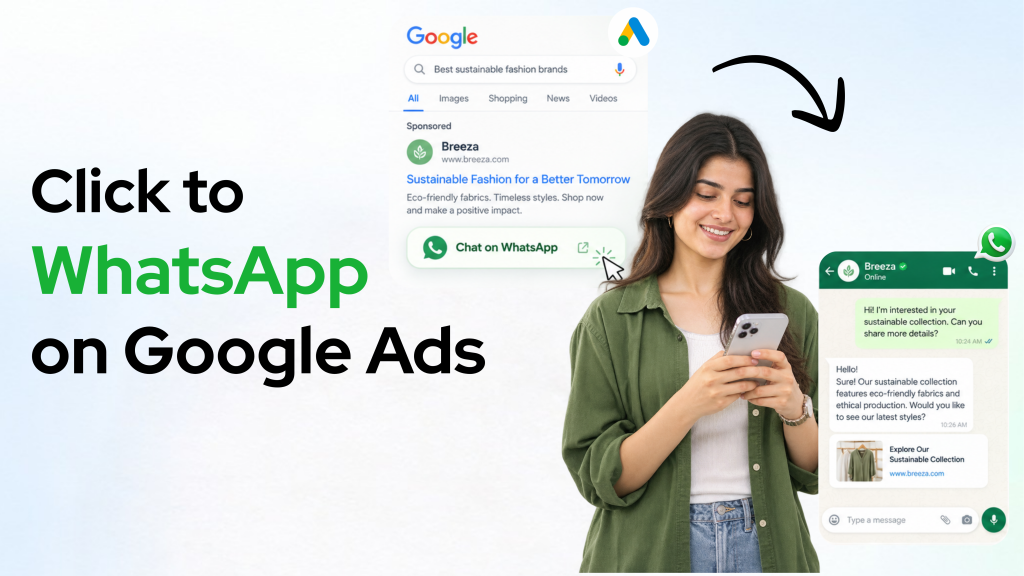
Click-to-WhatsApp on Google Ads allows eligible advertisers to add a WhatsApp messaging option to their advertisements through Google’s Message Assets.
When someone searches for a product or service on Google, they may see an advertisement with a WhatsApp message option. Clicking the advertisement’s headline takes them to the business’s website, while selecting the messaging option opens a WhatsApp chat with a pre-filled starter message.
This gives customers two ways to connect with a business: explore its website or begin a direct conversation.
The feature is designed to work with eligible Search and Performance Max campaigns. However, Google currently offers Message Assets in beta, so availability and eligibility may vary across accounts, locations and devices. Businesses should review Google’s latest requirements before planning a campaign. (Source: Google Ads Help)
Why Does This Matter During Peak Sale Periods?
During major shopping events, customers often have specific questions before making a purchase. Someone looking for a Black Friday laptop deal may want to compare models, while a person searching for Christmas gifts may need help finding something within a particular budget.
A website can provide product information, but it may not answer every question a customer has at that moment. A direct WhatsApp conversation gives businesses another way to address these queries while the customer’s interest is still active.
This can be particularly useful for:
- E-commerce brands: Answer questions about product specifications, discounts, stock, and delivery.
- Retail businesses: Help customers check product availability, store locations, and festive offers.
- Travel and hospitality: Respond to enquiries about holiday packages, bookings and seasonal prices.
- Real estate and automotive: Share details, arrange appointments, and respond to requests for quotations.
The value lies in reducing the distance between a customer’s search and the information they need to make a decision.
Google Ads and Meta Ads: Understanding the Difference
Both Google and Meta offer ways to bring customers into WhatsApp conversations, but they reach people at different stages of their buying journey.
Google Ads can connect businesses with people actively searching for a product or service. Meta Ads, on the other hand, can introduce products and offers to people as they browse platforms such as Facebook and Instagram.
For example, a customer searching for a particular smartphone deal on Google may already be comparing purchase options. Someone scrolling through Instagram may discover a new smartphone brand through an advertisement.
These approaches can complement each other. Google can help businesses respond to existing search demand, while Meta can help generate interest and product discovery.
How Can Brands Make the Most of Google Ads CTWA During Black Friday and Christmas?
Adding a WhatsApp option to an advertisement is only the starting point. Businesses need to think about the relevance of the advertisement, the quality of the conversation, and their ability to handle incoming enquiries.
1. Connect keywords with seasonal buying intent
Campaigns should focus on searches that reflect what customers are looking for during the shopping season. Keywords such as “Black Friday electronics deals”, “Christmas gifts under ₹3,000” or “Christmas cake delivery near me” can help businesses reach people looking for specific products and services.
The advertisement and its WhatsApp starter message should reflect the same intent. Someone clicking an advertisement for Black Friday laptop offers, for instance, should be able to begin with a relevant question about available models or discounts rather than a generic greeting.
2. Give customers useful answers
Customers usually start conversations because they need information. Businesses should be prepared to answer questions about prices, product features, discount conditions, payment options, and delivery timelines.
WhatsApp catalogues, automated replies and WhatsApp Flows can help present information and guide customers through predictable enquiries. More complex questions should be directed to a customer support or sales representative.
3. Adapt conversations to the shopping calendar
Black Friday and Christmas may fall within the same festive shopping period, but customers have different priorities during each occasion.
During Black Friday, conversations may revolve around limited-period discounts, product availability, and deal comparisons. As Christmas approaches, customers may focus more on gift recommendations, delivery deadlines, and last-minute purchases.
Businesses can use these changing needs to update their advertisements, starter messages, and responses throughout the season.
4. Prepare for the increase in enquiries
A successful campaign can bring more conversations than a business is prepared to handle. If customers receive delayed replies or inaccurate information about stock and delivery, the experience can quickly lose its value.
Businesses should plan their response capacity before increasing advertising spend. A WhatsApp Business Platform setup, supported by automation and a shared team inbox, can help teams manage incoming conversations more efficiently. Platforms such as TrustSignal can support businesses with WhatsApp Business communication infrastructure as they prepare for higher enquiry volumes.
5. Measure business outcomes, not just messages
A high number of WhatsApp conversations does not necessarily mean a campaign is generating sales. Businesses should track how many enquiries become qualified leads, bookings, or completed purchases.
They should also review response times, advertising spend, and the cost of handling conversations. Google Ads campaign costs and WhatsApp Business Platform messaging charges are separate considerations, so both should be included when evaluating the campaign’s overall commercial value.
Turning Search Interest into Meaningful Conversations
Click-to-WhatsApp on Google Ads gives businesses another way to connect with potential customers at a moment when they are actively looking for products or services. During Black Friday and Christmas, when shoppers compare offers and make time-sensitive decisions, this direct route can make it easier for them to get the information they need.
However, the real value does not come from the messaging button alone. It comes from how well businesses connect their advertisements with relevant conversations, respond to customer questions, and manage the demand that follows.
Google can help brands reach people who are searching. WhatsApp gives those people a direct way to continue the conversation. When both work together, businesses have a better opportunity to turn seasonal interest into meaningful customer relationships and sales.