

For years, digital advertising relied on a fairly straightforward formula. Someone clicked an ad, visited a website, and a tracking pixel helped marketers understand what happened next. It was enough to measure campaign performance, optimise spending, and improve future advertising decisions.
That model is no longer as reliable as it once was.
Today’s path to purchase is far more complex. A person might discover a brand through Instagram, browse products on a website, ask questions on WhatsApp, visit a physical store before making a purchase, and later return through a mobile app. At the same time, browser restrictions, ad blockers and growing privacy expectations have made traditional browser-based tracking increasingly limited.
For marketers, the challenge is no longer generating data. It’s connecting the right data across multiple touchpoints to understand what is actually influencing customer decisions.
This is where the Conversions API becomes important. While often viewed as just another technical integration, it represents a much bigger shift in how businesses are approaching marketing measurement and digital advertising. (Source: Meta)
The Limits of Browser-Based Tracking
For a long time, tracking pixels formed the backbone of digital advertising measurement, giving businesses visibility into actions such as page views, purchases, registrations, and other website events. Yet recent attribution audits show that pixels alone can now under‑report true marketing performance by 30–50%, simply because so many events never make it through the browser layer. (Source: Improvado)
However, digital experiences have evolved faster than traditional measurement methods.
Customers now interact with brands across websites, mobile applications, messaging platforms, emails, customer support channels, and physical stores, and customer journey analytics tools today explicitly track these multi‑touch, multi‑channel paths from first discovery to post‑purchase. Many of these interactions take place in native apps, chats, offline environments, and CRM systems, well outside the browser surface where traditional pixels operate.
At the same time, browsers continue to strengthen privacy protections, while ad blockers and connectivity issues can prevent a meaningful share of events from being captured at all. Recent server-side tracking studies estimate that 30–40% of client‑side conversion events are blocked or lost in standard pixel setups by ad blockers, Safari/Chrome privacy features and cookie consent flows. The result for marketers is a systematically incomplete picture of campaign performance, especially for high‑value actions happening in apps, messaging, and offline channels. (Source: TrackBee)
This doesn’t mean browser-based tracking has become obsolete; pixels still provide useful on‑site behavioural insight. Rather, it means businesses increasingly need a more dependable way to understand the complete customer journey by connecting first‑party data from web, apps, stores and messaging directly to their ad platforms. That’s where server-side frameworks such as the Conversions API come in.
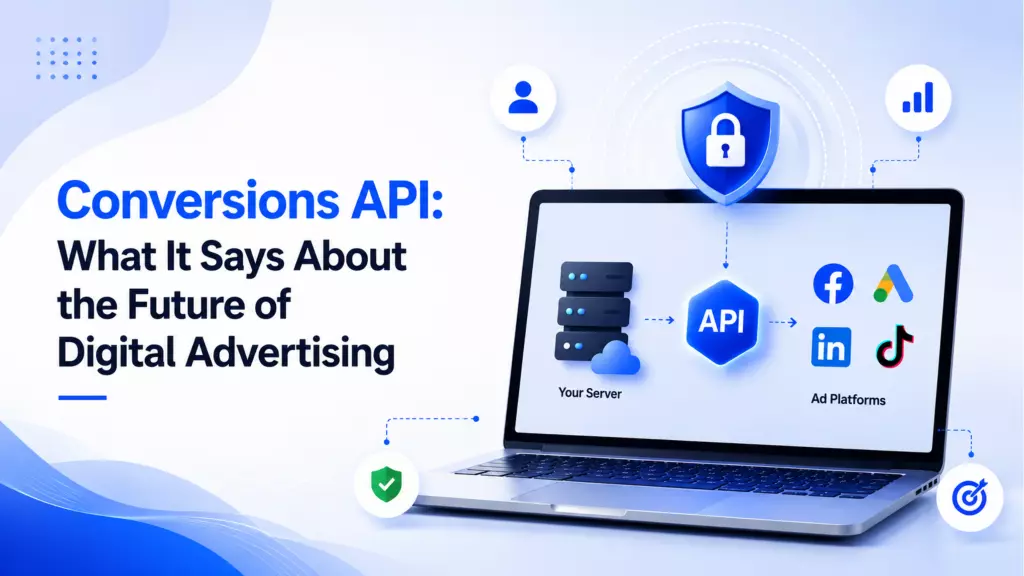
The Conversions API is essentially that connective tissue: a server‑side way to stream consented, first‑party events, site visits, cart activity, purchases, app actions, in‑store sales, even WhatsApp or RCS engagements, directly from your own systems into ad platforms. By bypassing browser limitations and ad blockers, it gives marketers a more accurate, privacy‑aware view of what’s driving conversions, while giving algorithms the rich signals they need to keep campaigns efficient even as traditional pixel tracking erodes. (Source: ROKT)
Where the Conversions API Fits In
The Conversions API was introduced to support this shift.
In simple terms, it allows businesses to securely share important marketing events directly from their own systems with Meta instead of relying only on information collected through a browser. These events can come from websites, mobile apps, CRM platforms, physical stores, phone interactions, and business messaging conversations.
Rather than replacing existing browser-based tracking, it complements tools like the Meta Pixel by helping businesses build a more reliable and connected view of customer activity across multiple touchpoints. (Source: Meta)
Beyond Websites: Where the Conversions API Delivers Value
The real strength of the Conversions API lies in its ability to support measurement across different customer touchpoints, not just websites. As businesses increasingly adopt omnichannel strategies, it helps create a more connected view of how people interact with a brand. By using consented first-party data from a business’s own channels, such as websites, apps, CRM systems and offline interactions, it delivers more reliable insights, stronger targeting and better measurement in an increasingly privacy-first digital ecosystem. Here are some of its most valuable use cases:
- Website events: When used alongside the Meta Pixel, the Conversions API creates a more reliable flow of event data because it is less affected by browser restrictions, ad blockers and connectivity issues. This can improve campaign measurement, strengthen event matching, and help businesses optimise for actions that happen later in the customer journey, such as subscriptions, repeat purchases or even in-store visits.
- App events: Businesses can send important app events directly through the Conversions API without relying entirely on SDK updates or waiting for new app releases. This makes it easier to keep measurements aligned with changing business goals while reducing maintenance effort.
- Offline events: Digital campaigns don’t always end with an online purchase. By connecting in-store sales and other offline actions, businesses can understand how Meta ads influence footfall, create audiences based on offline customers, and measure the real business impact of their advertising.
- Messaging events: As customer conversations increasingly happen on Messenger, Instagram, and WhatsApp, businesses can use the Conversions API to measure actions that originate from these chats. This provides greater visibility into how conversations contribute to purchases while helping businesses optimise supported click-to-message campaigns.
The Future of Digital Advertising Is Connected
Digital advertising is becoming less about tracking individual clicks and more about understanding complete customer journeys.
Success will increasingly depend on how well businesses connect different touchpoints, measure outcomes across channels and use those insights to improve customer experiences rather than simply optimise campaigns.
The Conversions API is one example of how the industry is adapting to this new reality. It reflects a broader movement towards more reliable measurement, stronger first-party data strategies and a better understanding of how customers actually interact with brands.
For marketers, this represents an important mindset shift. The question is no longer whether your campaigns generated clicks or impressions. It’s whether your measurement strategy reflects the way people actually discover, engage with, and buy from businesses today.
As customer journeys continue to span websites, messaging platforms, apps and physical locations, businesses will need measurement systems that are just as connected. Those who invest in understanding the full picture, not just individual interactions, will be better equipped to make smarter decisions, deliver more relevant experiences and build stronger relationships with their customers.
The Conversions API isn’t the future of digital advertising. It’s a reflection of where the industry is already heading. Rather, it reflects a much larger shift towards connected measurement, first-party data and customer-centric marketing. As digital experiences continue to evolve, the brands that succeed won’t necessarily be those collecting the most data; they’ll be the ones using it to understand customers more meaningfully and create experiences that feel connected from the first interaction to the final conversion.