Over the years, communication between businesses and customers has changed a lot. Before, a lot of brands depended on simple SMS, calls, or Emails. These messages did work, but they were mostly one-way and not engaging at all. Now, customers’ expectations have changed with the level of comfort we live in. We want everything quick and personalised, and shaped to our tastes. We are used to apps, more visual descriptions, and interactive processes. Studies have shown that messages that contain images, videos, buttons, and quick actions get much higher engagement compared to plain texts.
This is where rich communication ways have entered the market and helped leave the simple texting way out the door. Thus, to throw more light on this, TrustSignal brings this blog to explain this new era and how the RCS service and the WhatsApp Business API are doing so.
RCS Service: The Rich Layer in the Communication Ecosystem
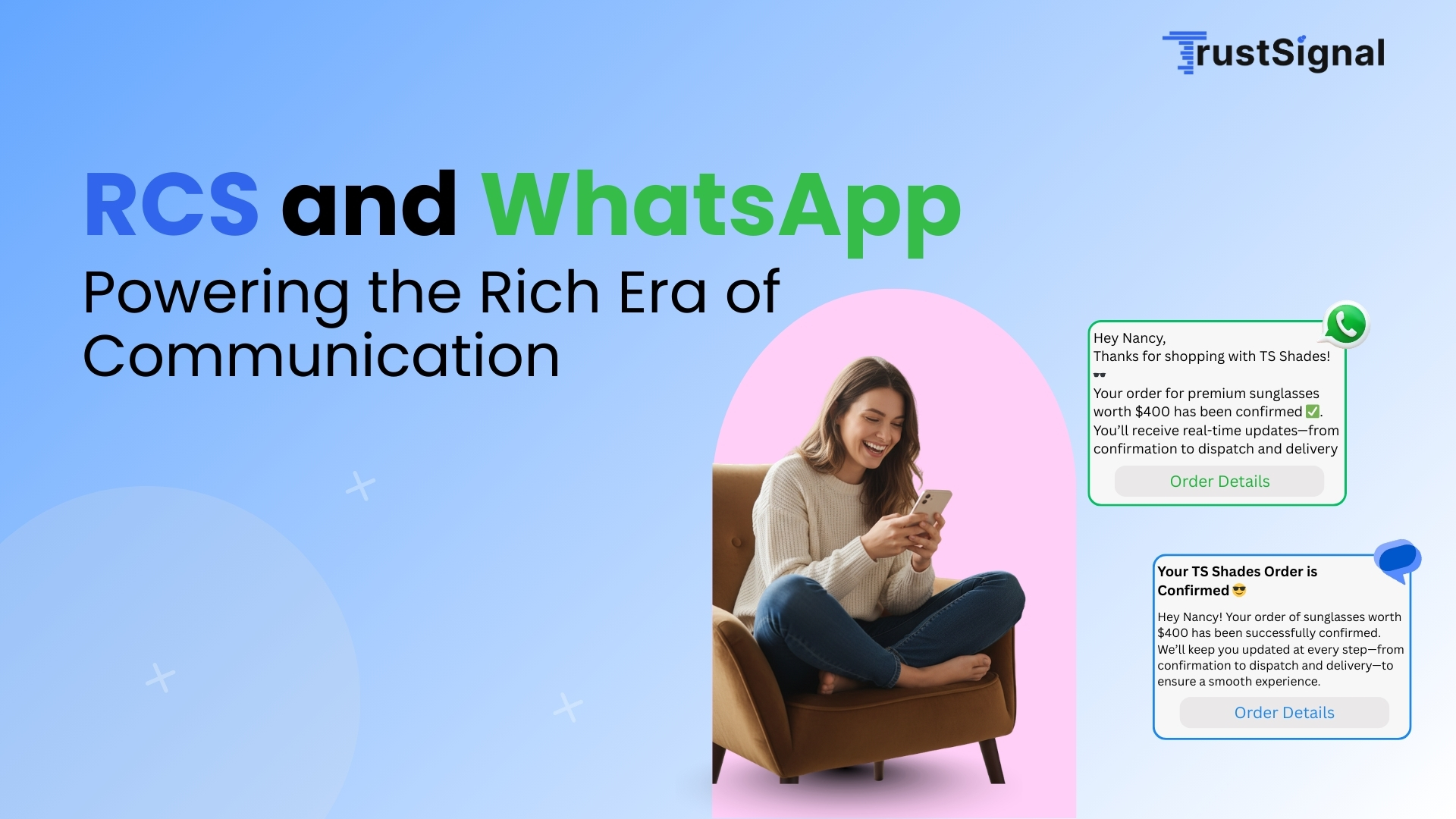
RCS (Rich Communication Service) is often seen as SMS 2.0. But this service is not only about improving SMS; it changes how messaging works inside a phone’s default messaging app. RCS enables businesses to interact more visually with:
- Real-time messaging.
- Images and videos.
- Product carousels and links.
- Verified brand profiles.
- Clickable buttons.
This gives users the feel of using an app rather than reading a bunch of business texts. Another important feature that it carries is trust. When customers see a message with a verified brand logo to interact with the brand confidently and trust it. Instead of just reading a message, customers can explore, scroll, and interact better with the message.
Also Read: How is RCS Helping Businesses Achieve Higher ROI?
Richness and Automation in Communication with RCS Messaging
Chatbots make RCS even more powerful. Instead of just receiving a message, customers can themselves start a conversation and get faster help for their queries. Businesses can manage queries in bulk, without any delays.
They help ease the process of attending to customers by:
- Enabling customers to choose services or options.
- Browsing products.
- Tracking orders.
- Connecting with customers when needed.
- Resolving customer queries much faster.
This reduces support pressure on support teams and makes communication smoother and faster.
How Does RCS Service Power Rich Communication Across Industries?
The impact of RCS services’ richness and interactive qualities is seen across all industries. The biggest impact it makes is in making communication non-static. For example:
1. The Retail and eCommerce Industries
- Customers receive product cards directly in the messages they receive.
- The message includes images, offers, and instant purchase options that help improve engagement.
- These campaigns experience higher click and response rates.
2. The Banking and Fintech Industry
- The transaction alerts become clearer and more secure.
- If customers notice anything unusual with their service or encounter any issues, they can take immediate action.
- Since the messages have verified sender IDs (i.e., brand logos), it brings more trust among the customers.
3. The Travel and Hospitality Industry
- Customers receiving updates about their flights, become very interactive.
- Changes regarding boarding details get much easier to manage.
- Customers receive important information in an instant.
4. The Logistics Industry
- Tracking orders becomes way easier.
- Timely updates reduce confusion among customers.
- Customer support is also faster than usual.
WhatsApp Business API: The Breakthrough in Interactive Engagement
Just like RCS, WhatsApp is becoming another breakthrough in the world of communication. It is one of the strongest tools of customer communication today. The reason behind its success is simple: people use it every day and are familiar with it. That’s why business communication with this tool feels very natural to customers. Today’s brands use WhatsApp for the following:
- Offer updates.
- Appointment reminders.
- Order updates.
- Customer support.
- Product discovery.
With WhatsApp, customers can have instant communication with the brand. This turns even broadcasting into a conversation. This makes WhatsApp an engagement channel rather than a messaging tool.
The Richness of Automation in Every Communication with WhatsApp
When we add automation with rich communication, it makes communication easy and well-functioning. Chatbots in WhatsApp enable customers to get instant help through automated conversations. When automation in communication and human support come together, businesses can seamlessly scale their communication without any hindrance.
This can help with:
- Getting instant answers to queries.
- Easily transferring complex queries to human agents.
- Recommendation of products and services.
- Capturing enquiries and leads.
- Providing step-by-step guidance to customers.
How does WhatsApp Make Business Engagement Easier for Different Industries?
The impact of WhatsApp Business API services is immaculate. Here’s how it helps:
1. The Retail and eCommerce Industries
- With WhatsApp, customers can ask questions before buying.
- Companies can instantly share item options right inside a chat.
- Thus, communication is clearer, and it brings quicker decisions.
2. The Travel and Hospitality Industry
- Seamless booking confirmations and updates on the same.
- Be it anytime or anywhere, customers can directly ask questions to the brands.
- The entire customer experience feels less salesy and more familiar to the users.
3. The Finance and Banking Industry
- Customers don’t have to wait for or make calls anymore; they can just message in the chat for any query they come across.
- Time-sensitive alerts and information reach the users faster.
- There is a conversational resolution of queries of the customers.
4. The Healthcare Industry
- Patient appointments become quicker and easier for users.
- Since WhatsApp is a familiar tool in communication, patients respond instantly to reminders.
- The feel of communication is more personal and accessible to all.
Where Business Communication is Headed in 2026?
As for 2026, the greatest change in communication strategy isn’t about choosing one channel. It is more about combining the right ones, and that’s what builds the real communication strategy for businesses.
Every brand is in search of a platform that will bring communication channels together and will make customer interaction organised, consistent, and more manageable. Some of the current trends include these:
- Quicker and timelier engagement expectations.
- Chatbots to support customer communication.
- Personalised messages in response to user behaviour.
- The new standard of communication is Omnichannel communication.
- Messaging is becoming verified, making communication trustworthy.
This new shift and strategy in communication is pushing brands to adopt unified (Omnichannel communication providers) partners like TrustSignal, where platforms like SMS, WhatsApp, RCS, and Email are used as a team effort rather than operating them separately.
Conclusion
It is a new phase of communication that we live in. Communication has become an interactive experience for customers, where they can easily and quickly take action.
The RCS service is enabling rich and branded communication into the user’s native inbox, and the WhatsApp Business API service is driving strong communication through familiarity in the communication space. If we combine both chatbots and predefined flows, we are enabling brands to converse in a much smarter and faster way.
This is the shift and the strategy we are talking about. With more and more brands adopting richer ways of communication, one thing’s clear: the future of business communication is indeed going to be interactive, customer-focused, and conversational.