

Acquiring customers has become the obsession of modern commerce. Brands invest heavily in ads, funnels, and conversion optimisation, all to win the first purchase. But once the transaction is complete, communication often stops. This is where many brands miss their biggest opportunity. Because the period immediately after a purchase is when customers decide something critical: whether they will ever buy from you again. Post-purchase communication, when done right, turns a single transaction into the beginning of a long-term customer relationship.
The part after the purchase is where brands must maintain healthy communication. And to make this easier, TrustSignal brings this blog to help brands handle this stage well and turn that one-time buyer into a loyal customer. For e-commerce, retail, and D2C brands, the real relationship with the customer begins after the purchase. The period immediately following a transaction is when customers reassess their decision, seek reassurance, and decide whether your brand deserves their long-term trust.
This stage, often referred to as post-purchase behaviour, is where brands have the greatest opportunity to turn a one-time buyer into a repeat customer. Yet many businesses still underinvest in it. Forward-thinking brands are beginning to recognise that post-purchase communication is not just a support function. It is a revenue strategy.
Understanding Post-Purchase Behaviour
After completing a purchase, customers rarely disengage from the brand. Instead, they enter an evaluation phase.
During this stage, customers typically:
- Track their order status to ensure timely delivery
- Compare their purchase with alternatives in the market
- Look for reassurance that they made the right decision
- Seek guidance on how to use or get the most value from the product
These behaviours reveal something important: the purchase may be completed, but the decision-making process is not entirely over.
Brands that remain present and helpful during this phase are far more likely to strengthen trust and build long-term relationships with customers.
Why the Post-Purchase Moment Is a Sales Opportunity?
There’s one thing brands do too often: chase new customers, when the real goldmine is the ones you already have. Gartner says it’s 5 times cheaper to keep existing customers than win over new ones; they already know and trust you, and they’ll likely tell their friends too. Now, that’s way smarter than starting from scratch every time, right? This makes the moment right after checkout super powerful for more sales.
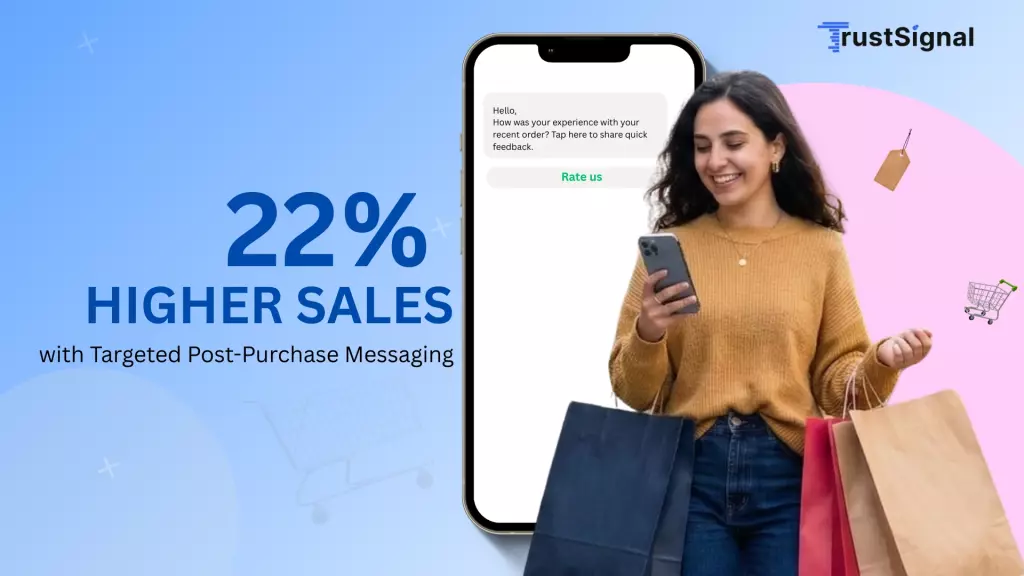
The Bain & Company shows that a 5% retention boost lifts profits 25-95%. Smart post-purchase communication accelerates repurchase rates (Narvar 2025), notes that positive experiences drive 22% higher repurchases.
It proves post-purchase isn’t the end of sales, it’s the start of more shopping with people who already believe in you.
The Post-Purchase Gap: Where Most Brands Fall Short
Have you ever felt that feeling when you’ve bought something online, and then WHOOSH! The brand just suddenly disappears..? That’s the post-purchase gap, leaving customers dangling in uncertainty, wondering if they’ve been forgotten.
After the sale, most brands go quiet or stick to generic stuff: a confirmation email, a shipment ping, then bam, discounts and promos. But customers crave something real. Studies show 70% of shoppers expect ongoing updates and support post-purchase (2025 consumer research), yet only 20% of brands deliver it well.
Meanwhile, they want:
- Clear updates: Where’s my order, when’s it arriving, what if it’s delayed?
- Human support: Fast replies, no ticket mazes.
- Real help: Tips to use the product right, fixes if it flops.
- To feel remembered: Personal chats, not stranger vibes.
Here’s the real gap, and the massive missed opportunities.
Brands see “purchase” as the finish line. Customers see it as a relationship kickoff. Result? Brands chase newbies at 5x the cost of retaining loyal ones (Invesp), while ignoring:
- Repeat sales goldmine: Loyal customers spend 67% more over time (loyalty benchmarks).
- Word-of-mouth wins: Happy post-buy folks refer 3x more friends.
- Upsell moments: 30% AOV boost from timely, natural offers (upsell data).
- Churn killers: 5% retention lift = 25-95% profit jump (Bain & Company).
- Trust builders: One good experience outweighs 10 ads.
This mismatch means customers feel ditched post-payment. Tiny issues snowball into bad reviews. All that acquisition hustle? Wiped by silence.
Post-purchase isn’t broken because brands don’t talk; it’s broken because they say the wrong things at the wrong time. Customers ask, “You here for me now?” Brands reply, “20% off next time!”
That silent gap between need and noise is where loyalty dies, and where brands miss their biggest growth shot.
Strategic Post-Purchase Communication: Where Brands Should Focus
Post-purchase communication should feel natural and helpful, not like a sales pitch. Instead of blasting the same old generic messages, brands need to send the right words at the right moments, like a friend checking in. This opens the door to more sales without feeling pushy.
Here’s where to focus your energy:
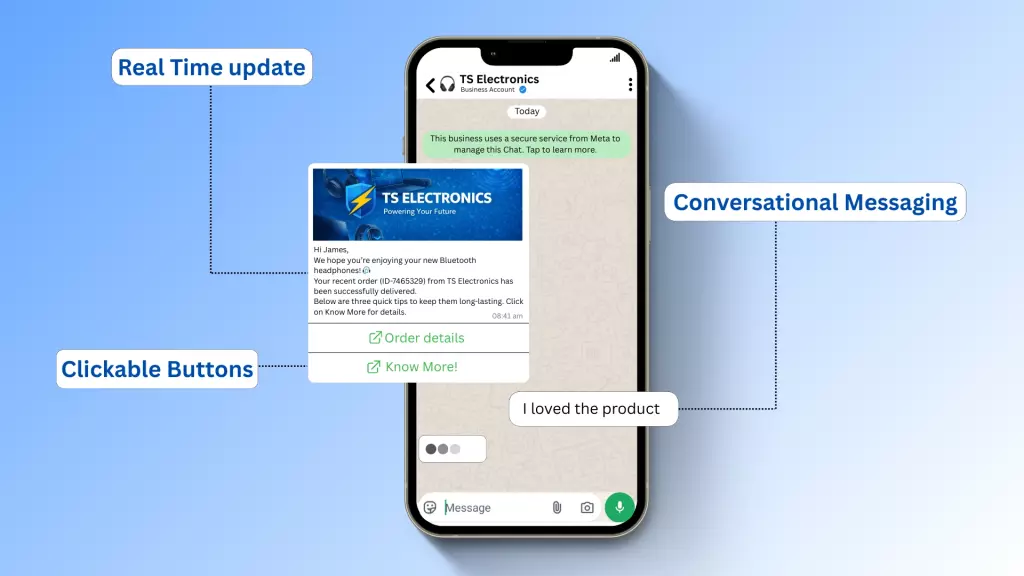
1. Transparency Through Real-Time Updates
After placing an order, customers want visibility. They want to know that their purchase is confirmed and when it will arrive. Clear order confirmations, shipping alerts, and delivery updates reduce uncertainty and prevent unnecessary support queries. These simple updates reassure customers and keep them connected to the brand.
For example, a simple message like, “Your order #2464 is confirmed and will ship tomorrow,” immediately reassures the customer.
2. Conversational Engagement Instead of Broadcast Messaging
Customers today expect communication with brands to feel natural and responsive. Instead of relying only on one-way notifications, brands should allow customers to ask questions, track orders, or request support within the same channel. Two-way communication creates a smoother and more engaging customer experience.
For instance: “Need help with your order? Just reply to this message, and we’ll assist you.”
3. Post-Delivery Support and Product Guidance
Communication should not stop once the product is delivered. A simple follow-up message with usage tips, care instructions, or a quick check-in shows that the brand cares about the customer’s experience with the product, not just the transaction.
For example: “Hi Sarah, hope you’re enjoying your new running shoes! Here are three quick tips to keep them comfortable and long-lasting.”
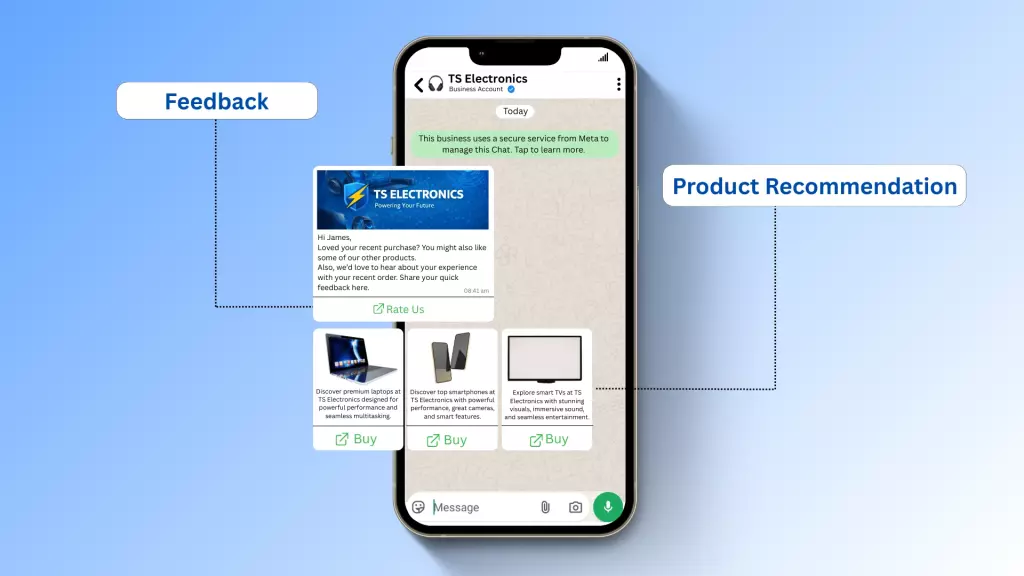
4. Contextual Recommendations
Customers are more likely to explore additional products when recommendations feel relevant. Suggesting complementary items or useful add-ons based on their recent purchase feels helpful rather than promotional, and can naturally encourage repeat purchases.
For example: “Loved your recent purchase? You might also like these matching accessories.”
5. Continuous Feedback and Customer Insight
Asking for quick feedback after delivery helps brands understand customer satisfaction. Even a simple message requesting a short review or rating can provide useful insights and help improve future communication and customer experience.
For instance: “How was your experience with your recent order? Tap here to share quick feedback.”
Types of Messages For Better Understanding
- Order confirmation messages: Reassure it’s real.
- Shipping updates messages: Keep them in the loop.
- Delivery note messages: Confirm it landed.
- Product tips messages: Guide real use.
- Feedback request messages: Listen and learn.
- Tailored offers: Spark the next buy.
Conclusion
Don’t let the purchase be the end of your customer story; it’s actually the starting line for loyalty and more sales. Smart post-purchase communication keeps you connected, tracking their journey to send helpful updates, tips, and offers that feel personal and timely. This structured messaging turns good experiences into great ones, boosting retention and repeat buys like nothing else.
Boosting your post-purchase communication doesn’t have to be chaotic; business communication platforms make it organized and effortless, keeping customers informed from cart to repeat buy. TrustSignal makes it effortless to scale these conversations, so every buyer feels valued long after checkout.
- Take TrustSignal, a tool built for this: it automates an alert through your email informing you of your template reclassification. If Meta reclassifies one (say, from utility to promotional), you get an instant heads-up email with details, keeping you compliant without the hassle.
- It also handles URL shorteners with click tracking, revealing what resonates so you can refine future messages.
- Plus, from day one, you’re added to a dedicated WhatsApp group for quick team support on any snag.